Let's not talk about accessibility but inclusivity. Designing for everyone.
Inclusivity versus accessibility versus diversity
As a UX Designer, I’ve faced a lot of projects where the client particularly asks “to be accessible”.
By using the word “accessibility” in our industry, we normally mean that our products have to be accessible for those with disabilities and we as designers should make sure that everyone can access and enjoy our products.
When accessibility just encompasses this group of people, we are leaving many others out of our range. That’s the reason why I prefer to use the word “inclusivity” instead of accessibility.
In the context of product design, inclusivity means making our products the most usable by the widest range of people, including (but not limited to) people with disabilities.
And what about “diversity”? That term is so trendy now that you can hear it in almost every big company.
Although the term diversity embraces all people regardless of their situation, culture, ethnicity, age, gender, sexuality, etc, have you ever thought that a group of diverse people could feel non-inclusive?
Gender pronouns: why are they important?
For those who are not familiar with what gender pronouns are, these are words that an individual would like others to use when talking to or about them.
The most commonly used forms for males are “he/him/his” and “she/her/hers” for females.
But, what happens when someone doesn't feel either of the two genders? People who are transgender or gender nonconforming may choose to use pronouns such as “they/them/ theirs,” but there are so many others that you can find here.
If your digital product has a section such as a profile/account, you might consider how useful it is for your user to describe his/her/theirs gender and, if it is, what are the options.
Combating racial bias
When it comes to designing products, racial biases can manifest themselves in our design decisions without even realizing it. By having a diverse team and organization, we can push our digital products and services to be more cross-cultural, aiming for diversity and inclusion.
To reach the global audience, it's important that your team is made up of diverse backgrounds and skillsets, but also from different cultures to garner more diverse thinking.
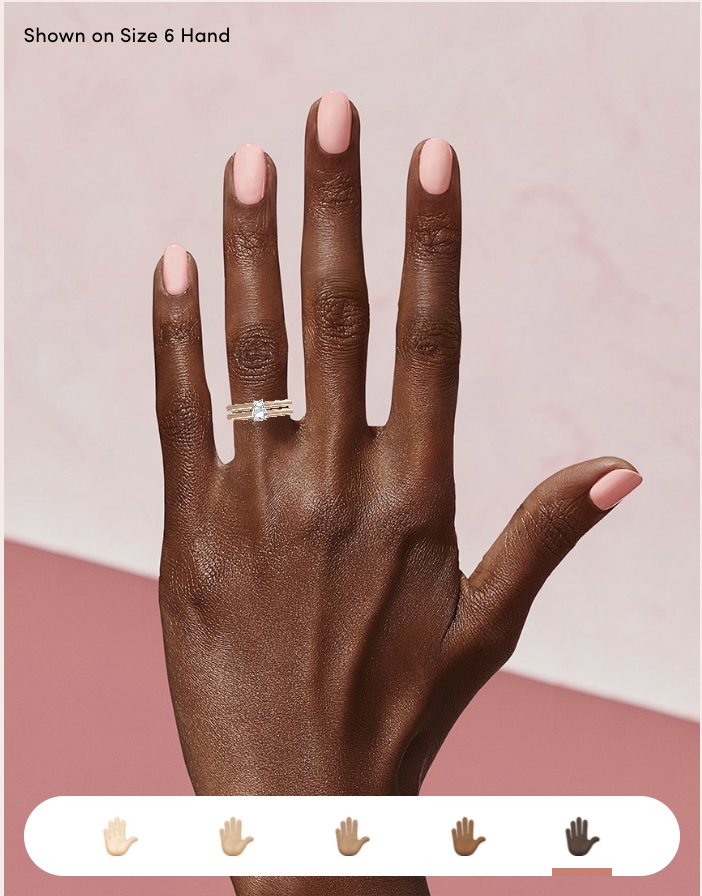
Oui by Jean Dousset is a great example of how to reach different communities.
This is just a portion of a cake
By taking this into account when designing our products we are going in the right direction. These tips above are just a little piece of a big cake we haven’t eaten but if you are hungry I invite you to grab a spoon, fork, or just your hands and help yourself.
“By incorporating these little changes in our designs we are a step closer to start building products and services that achieve global audience reach. ”
Here I leave you with some resources that I love: Inclusive Design by Microsoft, How to begin designing for diversity and Designing for accessibility is not that hard by Pablo Stanley.